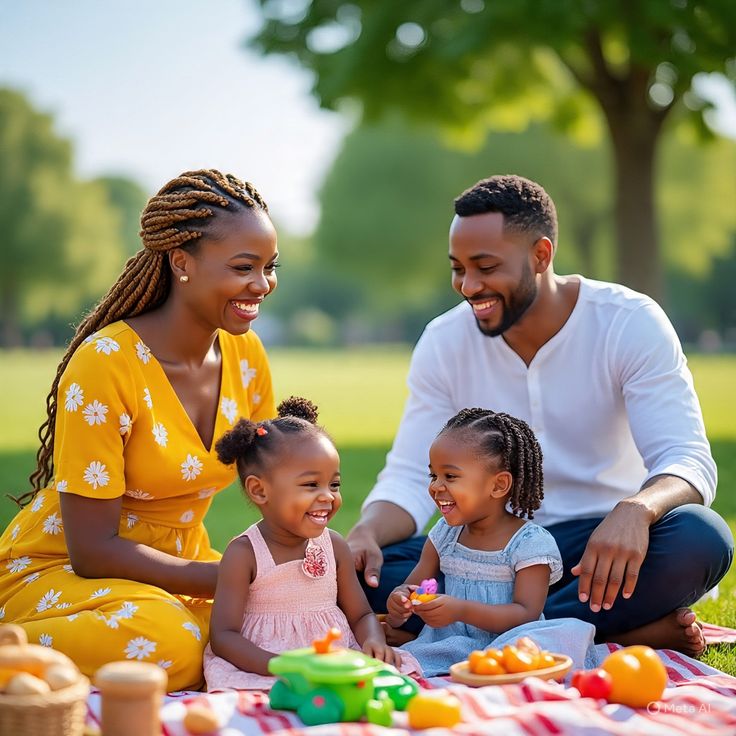
Across continents, Black families are leading grassroots efforts to reshape neighborhoods, reclaim narratives, and build lasting generational wealth — and the world is finally paying attention.
In the summer of 2025, a coalition of Black homeowners in Atlanta's Vine City neighborhood did something that had been attempted — and failed — for decades. They pooled resources, formed a community land trust, and purchased a full city block that had sat vacant for thirty years. Within eighteen months, it became a mixed-use development: affordable housing, a community kitchen, a childcare cooperative, and a small-business incubator.
"We stopped waiting for someone else to save our neighborhood," said Denise Holloway, one of the trust's founding members and a mother of three. "We are the someone else."
The Vine City project is not an anomaly. From Lagos to London, from Kingston to Cape Town, Black families and community organizations are driving some of the most consequential urban and social transformations of the decade — often with little institutional support, and almost always without the recognition they deserve.
"We stopped waiting for someone else to save our neighborhood. We are the someone else."
— Denise Holloway, Community Land Trust Founder, Atlanta
The Architecture of Resilience
Researchers who study community development have long noted that Black neighborhoods possess extraordinary social capital — dense networks of mutual aid, informal childcare, shared resources, and intergenerational knowledge transfer — that rarely shows up in economic statistics. What is changing now is the formalization of that capital into durable institutions.
In the United Kingdom, a network of Black-led housing associations has grown from twelve organizations in 2020 to over sixty in 2026, collectively managing more than 14,000 affordable homes. In Nigeria, diaspora remittances — long treated as simple financial transfers — are being channeled into structured investment vehicles that fund schools, clinics, and small enterprises in communities of origin.

Generational Wealth, Redefined
The conventional definition of generational wealth — property, financial assets, inheritance — has always been complicated for Black families by centuries of exclusion, dispossession, and discrimination. What is emerging now is a broader, more resilient conception: wealth as community infrastructure, as preserved knowledge, as cultural continuity.
"My grandmother didn't leave me money," said Marcus Webb, a 34-year-old entrepreneur in Birmingham, England. "She left me a network. She left me a reputation in the community. She left me the knowledge of how to ask for help and how to give it. That's worth more than any bank account."
Webb's story is increasingly common. Across the African diaspora, young people are inheriting not just financial assets but social ones — and they are building on them with a sophistication and intentionality that previous generations could not always afford.
Key Facts
- Black-led community land trusts in the U.S. have grown by 340% since 2020.
- Diaspora remittances to Sub-Saharan Africa exceeded $53 billion in 2025.
- Black homeownership rates in the UK rose 8 points between 2020 and 2026.
- Over 60 Black-led housing associations now operate in the United Kingdom.
The Road Ahead
None of this is without challenge. Black community organizations continue to face systemic barriers to capital, political representation, and institutional recognition. The gains of recent years are real but fragile, dependent on sustained effort and vulnerable to policy reversals.
But the momentum is undeniable. And at the center of it — as they have always been, even when the world wasn't watching — are families. Parents who stay up late planning community meetings. Grandparents who pass down stories and skills. Children who grow up knowing that their neighborhood belongs to them, and that they belong to it.
"We're not waiting for the world to change," Denise Holloway said. "We're changing it ourselves. Block by block. Family by family."

Dr. Amara Osei-Bonsu
Former senior correspondent for three international news organizations. 20 years covering Africa, the diaspora, and global policy. Pulitzer finalist 2021.


